
Picture this: You got a ticket or a misdemeanor charge a few months ago. Life got busy. Work shifted, a kid got sick, or the court letter went to an old address. The date came and went.
Now you are wondering if a police officer can pull you over and take you to jail.
The honest answer is yes, that can happen if a judge issued a bench warrant. The good news is that a bench warrant is one of the most common warrants in California, and it can often be cleared. This guide explains what a bench warrant is, why judges issue them, what can happen next, and the steps that usually help.
What Is a Bench Warrant?
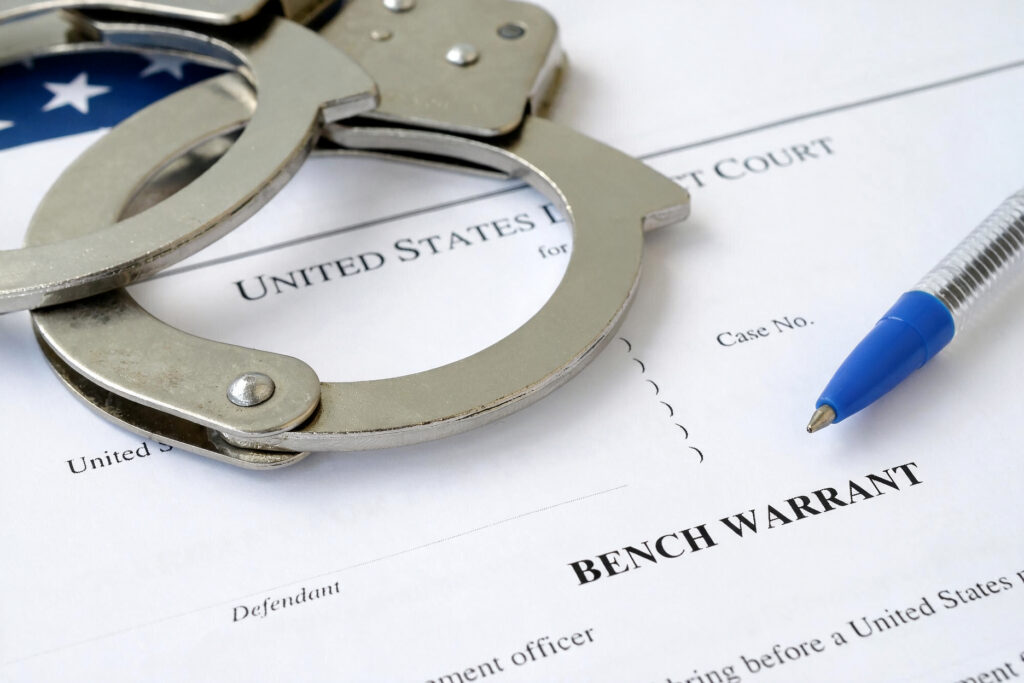
A bench warrant is an order from a judge that allows police to arrest you and bring you to court. It gets its name from the judge’s “bench,” the raised desk where the judge sits in the courtroom.
The key point is this: a bench warrant is not about a new crime. It is about a case that already exists. The judge issues it because you did not do something the court told you to do.
In California, the main law is Penal Code 978.5. It allows a judge to issue a bench warrant when a person fails to appear in court as the law requires. The same law says the warrant can be served in any county, just like a regular arrest warrant.
Simple example: Maria gets a misdemeanor citation in Bakersfield. She signs the ticket, which is her written promise to show up in court. She misses her arraignment (the first court hearing where charges are read). The judge can issue a bench warrant that same day.
Why Do Judges Issue Bench Warrants in California?
Most bench warrants come from one thing: a missed court date. But that is not the only reason. Common triggers include:
- Missing a court hearing. This can be an arraignment, a pretrial hearing, a trial, or a sentencing date.
- Not showing up after release. If you were let out of jail on bail or on your “own recognizance” (released on your written promise to return, without paying bail), you must come back on your court date.
- Ignoring a traffic ticket. California courts say that missing your date or not paying a ticket can lead to a warrant, extra fees, and a hold on your license.
- Not following a court order. Examples include not finishing community service, classes, or other terms the judge set.
- Probation problems. Missing a check-in or breaking a probation term can lead to a warrant. Our guide on probation violations in California explains how that process works.
One thing surprises many people. You do not always get a warning. The judge can issue the warrant as soon as your name is called and you are not there.
Bench Warrant vs. Arrest Warrant: What Is the Difference?
People often use these terms as if they mean the same thing. They do not. Here is a quick side-by-side look:
| Point | Bench Warrant | Arrest Warrant |
| Who asks for it | The judge, on their own | Police or prosecutors ask a judge |
| Why it is issued | You broke a court rule in an open case (like missing court) | Police believe you committed a crime |
| Is there already a case? | Yes | Often no, the case may start with the arrest |
| Common example | Missed sentencing date | Suspected theft or assault |
| Can police arrest you? | Yes | Yes |
In short, an arrest warrant is about a suspected crime. A bench warrant is about what happened, or did not happen, after the case started.
What Happens If You Have a Bench Warrant?
A bench warrant does not go away on its own. The Kern County Superior Court says a warrant stays active until one of three things happens:
- Police arrest you
- You appear in court
- You post bail
Until then, here is what you may face.
You can be arrested at any time
Police do not always come to your door. But if you are stopped for a broken tail light, a routine traffic stop, or any other contact, the officer can see the warrant and take you into custody.
Bail may be forfeited
If you posted bail and then missed court, the judge may order that bail forfeited (kept by the court). The Kern County court notes this on its criminal division page. If you used a bail bond company, that can create a separate problem with them. See how bail bonds work for more.
You could face a new charge
Missing court on purpose can be a crime by itself in California:
| Situation | Law | How it is usually charged |
| Released on own recognizance, misdemeanor case | Penal Code 1320(a) | Misdemeanor |
| Released on own recognizance, felony case | Penal Code 1320(b) | Felony |
| Released on bail, felony case | Penal Code 1320.5 | Felony |
| Missed a traffic court date you promised to attend | Vehicle Code 40508 | Misdemeanor |
The word that matters most here is “willful.” These laws are aimed at people who skip court on purpose to avoid the case. A real emergency or a notice that never reached you can make a big difference.
Your driver’s license may be affected
For traffic cases, California courts say a missed date can lead to a civil assessment of up to $100, a DMV hold, or a warrant. A DMV hold can block you from renewing your license. If your license is already suspended, our suspended license attorney page explains your options.
Release terms can get stricter
A judge who sees a missed date may be less willing to release you without bail next time.
How to Check for and Clear a Bench Warrant
Step 1: Find out if you have one
You can check through the court that has your case, or through local law enforcement. We walk through every option, including Kern County tools, in our guide on how to check if you have a warrant.
Step 2: Do not wait for police to find you
It is tempting to ignore it and hope it goes away. It will not. Being arrested during a traffic stop is often the worst way to clear a warrant. You have no control over the timing, and you may sit in custody until a judge can see you.
Step 3: Talk to a defense attorney before you walk into court
This step can change how the whole thing plays out. Here is why:
- In many misdemeanor cases, a lawyer can appear for you. California Penal Code 977 allows a person charged only with a misdemeanor to appear “by counsel only” in most cases. Some cases, such as certain domestic violence charges, still require you to be there in person for key hearings.
- A lawyer can ask the judge to recall the warrant. This is often called a motion to “recall and quash.” It asks the judge to cancel the warrant and set a new court date.
- A lawyer can explain why you missed court. A hospital visit, a wrong address, or a work emergency may help show the absence was not willful.
Step 4: Go back to court and deal with the original case
Clearing the warrant is only half the job. The original charge is still open. Once the warrant is handled, your case moves forward from where it stopped.
Hypothetical example: James missed a pretrial date on a petty theft case. His lawyer filed a request to recall the warrant and explained that James was at work out of town. The judge recalled the warrant and set a new date. James kept his release and did not spend a night in jail. Every case is different, but this shows why acting early matters.
Frequently Asked Questions About Bench Warrants
Is a bench warrant serious?
Yes. It gives police the power to arrest you. It can also lead to lost bail, a DMV hold in traffic cases, or a new failure to appear charge. The upside is that it is usually easier to fix early than late.
Is a bench warrant a felony?
No. A bench warrant is a court order, not a criminal charge. However, willfully missing court can be charged as a separate crime. In a felony case, that new charge can also be a felony under Penal Code 1320(b) or 1320.5.
How long will you be in jail for a bench warrant?
There is no set time. It depends on when a judge can hear your case, the type of charge, your record, and whether the judge sets bail. Some people are released soon after seeing a judge. Others stay in custody until the case is resolved. Handling the warrant with a lawyer before an arrest often gives you more control.
Can you clear a bench warrant without going to jail?
Often, yes, but there is no guarantee. Appearing voluntarily, especially with a lawyer, usually looks better to a judge than being brought in by police. In many misdemeanor cases, your lawyer can appear for you and ask the judge to recall the warrant.
How long does a bench warrant last in California?
It does not expire with time. It stays active until you are arrested, appear in court, or post bail. For more detail, read do arrest warrants expire?
How much is bail for a bench warrant?
The judge decides. The amount can depend on the original charge, your history, and why you missed court. In some cases the judge may not set bail at all and instead require you to appear.
How do I know if I have a bench warrant?
You can search your case on the court’s website, call the court clerk, or ask a defense lawyer to check for you. Our guide on how to check if you have a warrant covers each option step by step.
Missed Court in Bakersfield? You Still Have Options
A bench warrant feels scary, but it is not the end of the road. Most of the time, it means the court wants you back so the case can move forward. The sooner you act, the more choices you usually have.
If you think you have a bench warrant in Kern County, the Law Office of David L. Faulkner can help you find out, ask the court to recall it, and handle the original case. Whether it started with a misdemeanor charge, a traffic ticket, or a probation issue, we will explain your options in plain words.
Call (661) 324-4777 for a free, confidential consultation or contact us online. Taking care of it now is almost always easier than waiting for a traffic stop to take care of it for you.