

You are driving on through Bakersfield road on a regular afternoon. Traffic is moving. The road is clear. Then you see the lights behind you. The officer hands you a ticket marked “22350 CVC” or “unsafe speed.”
Most people pay it without thinking twice. That is usually a mistake.
CVC 22350 is different from most traffic tickets. There is no fixed number that defines a violation. The case rests on a judgment call, and judgment calls can be challenged. This guide covers what this law means, what it costs, how serious it can get, and what you can do about it.
What Is CVC 22350? The Basic Speed Law Explained
California Vehicle Code 22350 is known as the Basic Speed Law. The exact text reads:
“No person shall drive a vehicle upon a highway at a speed greater than is reasonable or prudent having due regard for weather, visibility, the traffic on, and the surface and width of, the highway, and in no event at a speed which endangers the safety of persons or property.”
Notice what is missing. There is no number. The law does not say you cannot drive over 45 or 50 mph. It says you cannot drive at a speed that is unreasonable or unsafe given the conditions around you at that moment.
This is why your ticket says “unsafe speed” instead of listing a specific figure. The officer made a judgment that your speed was not safe for the conditions. Because the violation is based on judgment rather than a hard number, you have real room to push back.
California’s Four Major Speed Laws- Where CVC 22350 Fits
California does not operate on a single speed law. There are four, and knowing where CVC 22350 fits helps you understand your situation better.
| Law | CVC Code | What It Covers | Can It Be Challenged? |
| Basic Speed Law | 22350 | Driving faster than safe for conditions | Yes |
| Prima Facie Speed Limits | 22352 | Default limits in specific zones | Yes |
| Maximum Speed Law | 22349 | Absolute 65/70 mph highway limits | No |
| Minimum Speed Law | 22400 | No driving so slow you block traffic | Limited |
CVC 22350 is the most commonly issued of the four and also the most defensible. The maximum speed law, by contrast, is absolute. If you were going 75 on a 65 mph freeway, conditions do not matter. But for CVC 22350, they matter entirely.
Prima Facie vs. Absolute Speed Limits- Know the Difference
Understanding this distinction could be the difference between winning and losing your case.
Prima facie speed limits are the default limits that apply in specific areas unless a sign says otherwise. They are presumed to be safe, but that presumption can be challenged in court.
Under CVC 22352, the prima facie limits are:
- 25 mph in residential areas and school zones
- 15 mph in alleys, at railroad crossings, and at intersections where you cannot see oncoming traffic for at least 100 feet
If you were cited for going 32 mph in a residential zone, you could argue that conditions at that moment made 32 mph perfectly reasonable. The argument is available to you.
Absolute speed limits under CVC 22349 and CVC 22356 are a different matter entirely:
- 65 mph on most freeways and highways
- 70 mph on freeways specifically posted for that speed
Going over these limits is a violation regardless of how safe the conditions were. No weather, no traffic, no visibility argument applies. The number is the number.
A simple way to remember it: prima facie limits are the starting point for a conversation. Absolute limits are the end of one.
What “Reasonable and Prudent” Actually Means
The entire CVC 22350 case hinges on two words: reasonable and prudent. These are subjective, which is exactly why the law is challengeable.
The officer is required to consider several factors before writing a CVC 22350 ticket. Those factors include:
- Weather- Rain, fog, ice, and glare all reduce what counts as a safe speed. A clear, dry afternoon gives a driver much more room than a foggy night.
- Road surface and width- A wide, well-maintained road is safer at higher speeds than a narrow, crumbling back street. The physical setup of the road matters.
- Traffic density- If the road was empty, the risk to other people drops significantly. The law specifically requires “due regard for the traffic on the highway.” No traffic often means no real danger.
- Visibility- A long open straightaway allows more reaction time than a curved road with obstructions.
- Pedestrians, cyclists, and animals- People on foot or bikes near the roadway raise the risk level considerably.
- Hills and blind curves- These limit stopping distance and reaction time. Officers often position themselves at the bottom of steep grades for this reason.
- Time of day- 2 AM on a deserted road is a different situation from 3 PM near a school.
Here is a useful example. John drives 55 mph on a California highway on a Monday morning. Light traffic, clear skies, dry road. He is fine. He drives the same road at the same speed on Tuesday during rush hour in a snowstorm. He is likely in violation. Same driver, same speed, same road. Completely different outcome because of conditions.
What Is Velocitation? and Why It Matters for Your Case
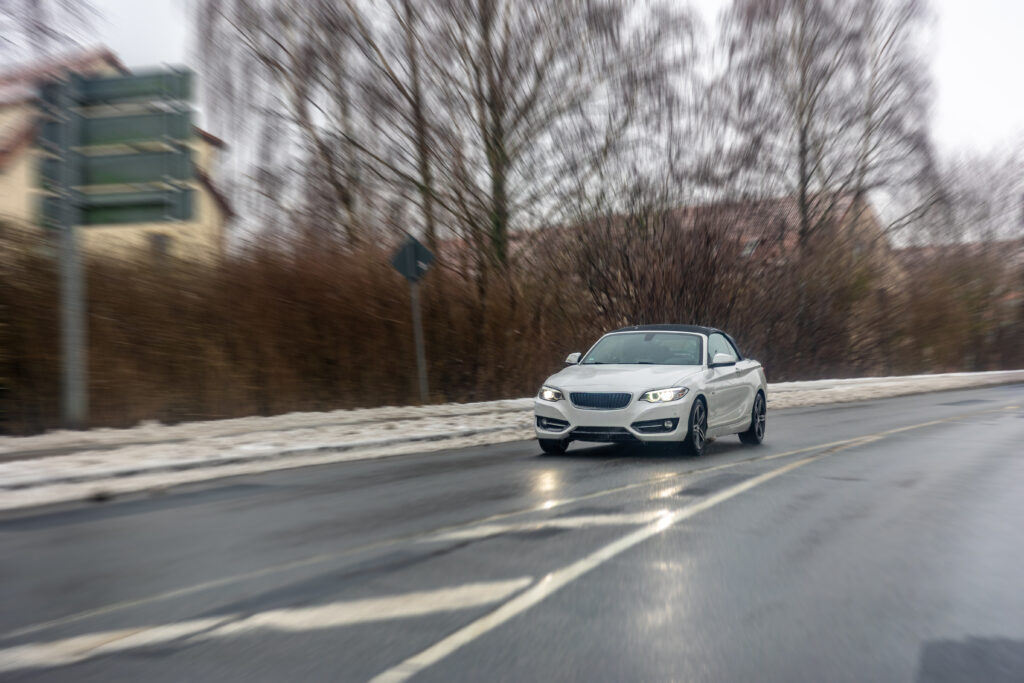
Velocitation is a psychological phenomenon that most drivers have experienced without knowing the name for it.
When you drive at highway speeds for a sustained period, your brain adapts to that pace as the new normal. When you then exit onto a slower road, your brain underestimates your actual speed. You feel like you are going 40 mph when you are actually doing 55 mph. It is not recklessness. It is a documented quirk of human perception.
This matters for CVC 22350 cases because officers frequently set up in transition zones, specifically the areas where a freeway or highway feeds into a residential street or lower-speed surface road. Drivers coming off the highway are naturally carrying extra speed, and many are not fully aware of it.
Neither of the major competing articles on this topic covers velocitation at all. Understanding it gives you a more complete picture of why citations often happen in these zones and how to explain your situation to a court. Velocitation alone will not dismiss your ticket, but combined with safe road conditions and low traffic, it contributes to an overall argument that your driving was not unsafe.
How Much Is a Speeding Ticket in California Under CVC 22350?
This is one of the most searched questions about this law, and the answer surprises most people.
Base fines by how much you were over the limit:
| Speed Over Limit | Base Fine |
| 1 to 15 mph over | $35 |
| 16 to 25 mph over | $70 |
| 26 mph or more over | $100 |
| Over 100 mph (1st offense) | $500 plus possible 30-day suspension |
| Over 100 mph (2nd offense within 3 years) | Up to $750 plus possible 6-month suspension |
| Over 100 mph (3rd offense within 5 years) | Up to $1,000 plus possible 1-year suspension |
What you actually pay after all fees and assessments:
California adds penalty assessments, court construction fees, DNA identification fund charges, emergency medical services fees, and other costs on top of the base fine. The real totals look like this:
| Base Fine | Estimated Total After All Fees |
| $35 | ~$238 |
| $70 | ~$360 |
| $100 | ~$490 or more |
When someone says they will just pay the $35 and be done with it, they are actually paying close to $240 and still collecting a point on their record that can cost them much more over time.
DMV Points, License Suspension, and Insurance Impact
A CVC 22350 conviction adds one point to your DMV record. One point sounds minor, but it adds up fast.
California’s negligent operator thresholds are:
- 4 points in 12 months
- 6 points in 24 months
- 8 points in 36 months
Hit any of these and the DMV can suspend your license. A single speeding ticket puts you a quarter of the way to a suspension within the 12-month window.
The bigger long-term cost is insurance. Insurers treat a speeding conviction as a risk indicator. One conviction can raise your premiums by 20% to 30%. If you are currently paying $1,500 a year, that climbs to $1,800 or more. Over three years, which is how long a point stays visible to insurers, that one ticket could cost you well over $1,000 in extra premiums.
Traffic school can mask the point from your insurer, but it is only available once every 18 months. Commercial drivers are usually excluded, and if your speed was very high, the judge can deny the traffic school option outright.
Is CVC 22350 an Infraction, Misdemeanor, or Felony?
This question comes up often, and the answer depends on the circumstances.
Standard CVC 22350: Infraction- In the vast majority of cases, this is an infraction. That means a fine and a point on your record. No arrest. No jail. No criminal record.
When it becomes a misdemeanor- If your speed was combined with driving that showed willful disregard for others, it can be charged as reckless driving under CVC 23103. That is a misdemeanor carrying up to 90 days in county jail and a fine of up to $1,000. If someone was injured, the consequences go higher.
When it becomes a felony- Speeding alone almost never reaches felony level. It can get there if it involves street racing under CVC 23109 or if reckless driving causes serious injury or death.
What is criminal speed in California? This is not a separate code section but refers to speeds so excessive that they move beyond infraction territory. Driving over 100 mph is where this line begins to appear. It triggers steeper fines, possible suspension, and opens the door to additional charges depending on the circumstances.
How Officers Measure Your Speed- And Where They Make Mistakes
Radar- The most common tool. It sends radio waves that bounce off your vehicle and return with a speed reading. The problem is that radar beams spread out over distance. At several hundred feet, the beam may be wide enough to catch a nearby truck or another vehicle instead of yours. The device picks up the strongest signal, which is not always the right one.
California law also requires officers to visually estimate your speed before using the device. If the officer relied entirely on the radar reading without forming an independent visual judgment, that is a procedural error.
Calibration records matter too. If the device was not properly maintained and tested, the reading becomes questionable.
Lidar- Laser-based and more precise than radar, but still fallible. The most common error is the sweep error, which happens when the officer moves the device across the vehicle instead of holding it steady. This creates a false reading that is higher than the vehicle’s actual speed.
Pacing- The officer follows behind you and matches your speed using their own speedometer. For this to be valid, they must maintain a constant following distance for a reasonable amount of time. If they were still accelerating to catch up to you when they took the reading, their speedometer was showing their speed, not yours.
Visual estimation alone- No device, just the officer’s eyes. This is the most subjective form of evidence and the hardest for the prosecution to defend in court.
The speed trap defense under CVC 40802- If a municipality uses radar on a road without a valid Engineering and Traffic Survey, the road may qualify as a speed trap. These surveys measure the 85th percentile speed, meaning the speed at or below which 85% of drivers naturally travel. They must be renewed every 5, 7, or 10 years depending on the road. If the survey is expired, the officer cannot legally testify about their radar reading. Without that testimony, many cases are dismissed. You or your attorney can request these survey records from the local public works department before your court date.
Legal Defenses to CVC 22350- How to Fight Your Ticket
Defense 1: Conditions were safe- The most direct defense. You argue that even if you were going faster than the posted limit, the weather was clear, traffic was light, visibility was good, and no one was in danger. The prosecution must prove your speed was unsafe. Your job is to raise doubt about whether they can.
What to gather: photos of the road, weather records for that day, any documentation of traffic conditions.
Defense 2: Speed trap- Request the Engineering and Traffic Survey for the road where you were cited. If it is expired or does not exist, the radar evidence may be inadmissible and the case often falls apart.
Defense 3: Faulty radar or lidar- Request calibration logs for the device. Question whether the officer followed proper procedure. Raise sweep error if lidar was used. Ask whether the officer formed a visual estimate before using the device.
Defense 4: Inaccurate pacing- Ask how long the pace lasted, how close the officer was, and whether they were still closing in at the time of the reading. Any inconsistency in the account weakens the evidence.
Defense 5: Emergency necessity- If you were speeding because of a genuine emergency, this is a recognized legal argument. It does not automatically dismiss the ticket, but it is worth raising.
Defense 6: Signage issues- If the speed limit sign was blocked by a tree, missing, or poorly placed at a transition zone, you can argue you had no reasonable notice of the lower limit. Return to the location and photograph the signage.
Defense 7: School or construction zone exemptions- School zone reduced limits apply when children are present. If you were cited at 9 PM, the lower limit likely did not apply. Construction zone enhanced fines require workers to be on site. If the site was empty, the enhanced penalty may be invalid.
Your Options After Receiving a CVC 22350 Ticket
| Option | What It Means | Cost | Time | Pros | Cons |
| Pay the fine | Pleading guilty | Full ticket amount | Minimal | Quick, no court | Point on record, higher insurance |
| Traffic school | Pay fine plus course fee | Ticket plus $50 to $100 | Several hours | Hides point from insurer | Only once per 18 months, not always available |
| Trial by Written Declaration | Fight by mail | Free to file | Low | No court appearance, officer often does not respond | May still lose |
| Trial de Novo | In-person trial after failed declaration | Free to file | Half day in court | Second chance, full defense available | Takes time |
| Hire an attorney | Attorney handles everything | Attorney fee | None for you | Best shot at dismissal, no court appearance required | Has a cost |
Trial by Written Declaration is worth trying in most cases. You submit a written argument, the officer must also submit one. If the officer does not respond, you win by default. Officers often skip this step because it means paperwork on their own time. If you lose, you can usually request a Trial de Novo, giving you a second shot.
What to Do Immediately After Being Pulled Over
Pull over safely- Signal, move right, stop in a safe location. Stay calm.
Keep the conversation brief- Be polite. Do not argue. The roadside is not the place to make your case.
Do not admit your speed- Officers are trained to ask questions that lead to admissions. “Do you know how fast you were going?” is a common opener. If you say “I think around 50,” you have just helped the officer make their case. A better response is “I was driving with the flow of traffic.” Or simply: “I prefer not to answer.”
Sign the ticket- This is not an admission of guilt. It is only confirmation that you received the citation and understand you must appear or pay.
Document everything immediately after- Write down or record on your phone: the exact time and location, weather conditions, how much traffic was on the road, the width and condition of the road, how far you could see ahead, whether speed limit signs were clearly visible, and any unusual circumstances like a downhill grade or transition zone.
Return to the location if possible- Take photos of the road, the signage, and any sight line obstructions. This evidence can be useful later.
Related California Vehicle Codes You Should Know
- CVC 22349 (Maximum Speed Law) The absolute upper limit. 65 mph on most highways, 70 mph where posted. No conditions-based argument applies here.
- CVC 22352 (Prima Facie Speed Limits)Sets the default limits of 25 mph in residential and school zones and 15 mph in alleys and at railroad crossings. These are rebuttable under CVC 22350.
- CVC 22356 (70 mph Freeway Zones) Certain freeways are posted at 70 mph. Exceeding this is an absolute violation.
- CVC 22362 (Speeding in Construction Zones) Fines are doubled, but only when workers are actually present on site. If the construction zone was empty, standard fines apply.
- CVC 23103 (Reckless Driving) When speeding crosses into willful disregard for safety, it becomes a misdemeanor. Up to 90 days in jail and a $1,000 fine. Higher if someone was injured. See our reckless driving defense page for more.
- CVC 23582 (DUI Speed Enhancement) If you are convicted of DUI and were also driving 20 to 30 mph over the limit in a reckless manner, this enhancement adds a mandatory minimum 60 days in jail to your sentence.
- CVC 22400 (Minimum Speed Law) Driving so slowly that you block the normal flow of traffic is also a violation. A $238 fine and a point on your record.
- CVC 40508 (Failure to Appear) Ignoring your ticket is a misdemeanor. Your license can be suspended and what started as a $238 infraction becomes a criminal matter. Never ignore a traffic citation.
Frequently Asked Questions
How much is a CVC 22350 fine in total?
After all California fees and assessments, a $35 base fine becomes roughly $238, a $70 base fine becomes roughly $360, and a $100 base fine becomes $490 or more.
Is a CVC 22350 violation a misdemeanor or infraction?
It is an infraction in most cases. It can become a misdemeanor if it involves reckless driving under CVC 23103.
Is speeding a felony in California?
Almost never on its own. It can become a felony if it involves street racing or causes serious injury or death.
What are the 4 major speed laws in California?
The Basic Speed Law (CVC 22350), Prima Facie Speed Limits (CVC 22352), Maximum Speed Law (CVC 22349), and Minimum Speed Law (CVC 22400).
How many points does CVC 22350 add to my record?
One point. You risk a license suspension if you reach 4 points in 12 months, 6 in 24 months, or 8 in 36 months.
Can I go to traffic school for a CVC 22350 ticket?
Yes, if the judge allows it and you have not used traffic school in the past 18 months. Commercial drivers are generally excluded.
What happens if I ignore a CVC 22350 ticket?
You can be charged with a misdemeanor under CVC 40508 and your license may be suspended. Never ignore a citation.
What is the speed limit in residential areas in California?
25 mph unless a sign says otherwise. This is a prima facie limit that can be challenged if conditions supported a higher speed.
Can I fight a CVC 22350 ticket if radar was used?
Yes. You can challenge the calibration of the device, the officer’s technique, and whether a valid Engineering and Traffic Survey exists for the road. If the road is a speed trap, the radar evidence may be inadmissible.
What is the difference between CVC 22350 and CVC 22349?
CVC 22350 is based on conditions and is rebuttable. CVC 22349 is an absolute limit of 65 or 70 mph and cannot be challenged on safety grounds.
How long does a CVC 22350 violation stay on my record?
A point from a speeding conviction stays on your DMV record for 36 months from the date of the violation.
Contact a Bakersfield Defense Attorney
A CVC 22350 ticket is not a lost cause. Because the law is based on judgment rather than a fixed number, there are real arguments available that can lead to a dismissal or reduced charge.
Bakersfield roads have their own traffic patterns, their own engineering survey histories, and their own local enforcement habits. An attorney who knows the area knows where to look and what arguments carry weight in Kern County courts.
You also do not need to take time off work. For traffic infractions in California, an attorney can appear in court on your behalf.
If you are holding a CVC 22350 citation, contact our office for a free case review. We will look at the details of your ticket and give you an honest assessment of your options.