

Being stopped by the police can feel intimidating, even when you’ve done nothing wrong. Too many people walk away from encounters unsure what they could, and should, say or do to protect themselves.
This post explains the core rights and responsibilities for common interactions with law enforcement, on foot, during a traffic stop, in your vehicle, or when officers come to your home, and gives plain-language scripts you can use today. (Note: laws vary by state; consult a lawyer for advice specific to your situation.)
Ready to learn the rights police don’t want you to know and simple steps to protect yourself in these encounters?
Your Rights When Stopped by the Police
When you’re stopped by the police, knowing a few core rights can protect you: the right to remain silent, the right to refuse consent to a search, and the right to ask whether you are free to leave or are under arrest. Use these rights calmly and clearly, your tone matters as much as your words.
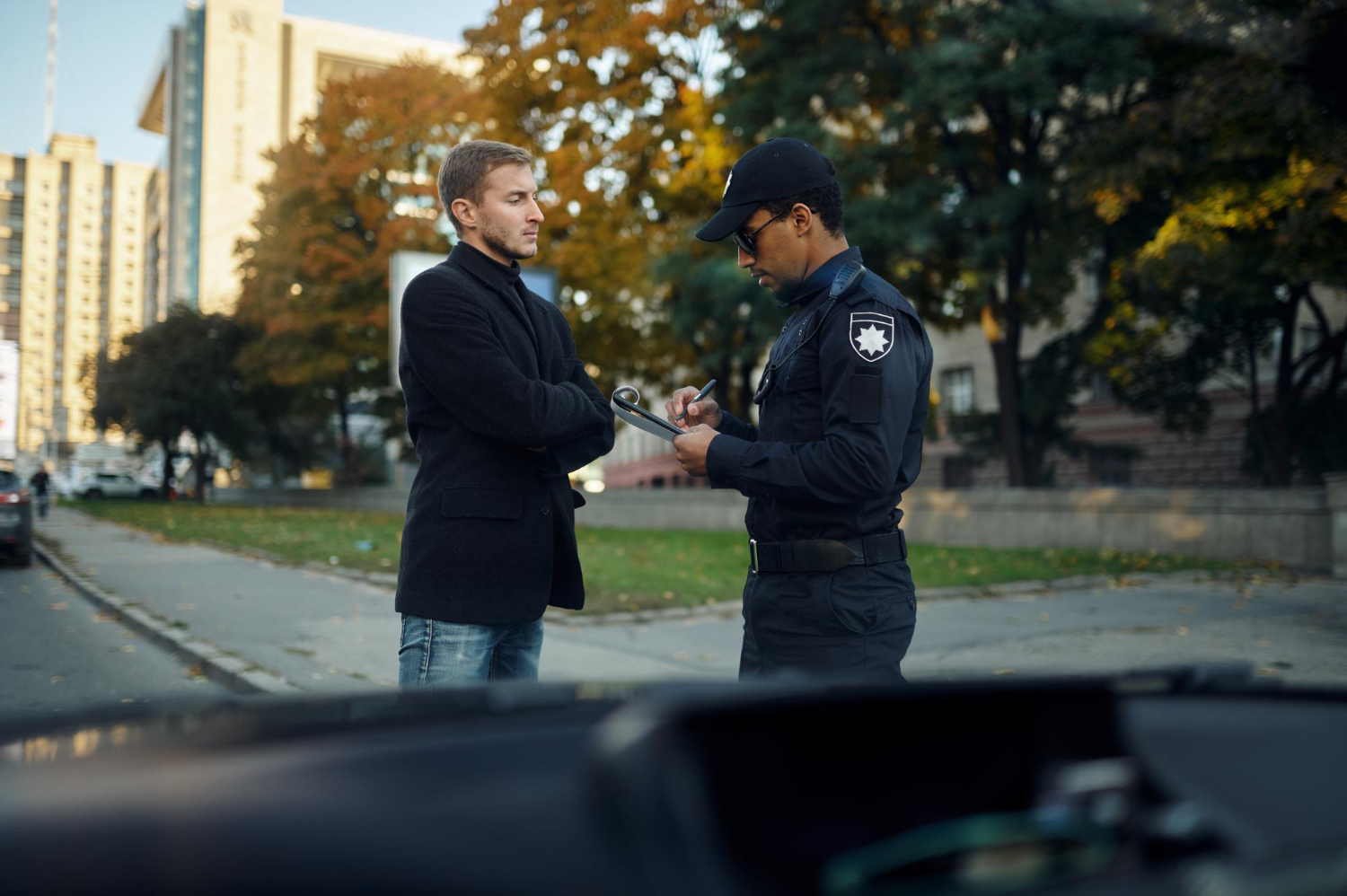
– Right to Remain Silent
The right to remain silent protects you from self-incrimination. You can politely decline to answer questions beyond identifying yourself. If the interaction becomes custodial and you face interrogation, Miranda warnings apply — but even before that, invoking your right is sensible.
Scripts that work: say clearly, “I wish to remain silent,” or “I am invoking my right to remain silent and want an attorney.” Avoid volunteering extra information, politely repeat that you will not answer questions without counsel.
– Right To Refuse Consent to a Search
You generally may refuse consent to a search. This protection flows from the Fourth Amendment against unreasonable searches and seizures. In most situations, an officer needs a warrant or probable cause to search you or your belongings without consent — but note exceptions (vehicle searches, plain view, exigent circumstances).
How to refuse: calmly state, “I do not consent to a search.” Saying it out loud helps preserve your refusal for later legal challenges. Do not physically prevent a lawful search, refuse verbally and let your attorney challenge the search in court if needed.
– Right To Ask if You Are Free To Leave or Under Arrest
It’s your right to ask whether you are being detained or are free to go. That question clarifies whether the encounter is a consensual stop (you may leave) or a detention/arrest (you are not free to leave). Simple phrasing: ask, “Am I free to leave?” or “Am I under arrest?”
Keep your hands visible, stay calm, and be respectful, hostility can escalate a routine stop. If you’re told you’re under arrest, repeat your request for an attorney and do not answer further questions without counsel.
Quick micro-FAQ: Miranda applies to custodial interrogation (not every stop). Officers can sometimes search without a warrant under narrow exceptions (vehicle exception, plain view, exigent circumstances). If you refuse consent, say so aloud and ask for an attorney; your defense attorney can later challenge any unlawful search or seizure.
Your Responsibilities When Stopped by the Police
When stopped by the police, you have certain responsibilities that help keep the encounter safe and lawful: provide basic identifying information when required, follow lawful orders, and cooperate without providing self-incriminating statements.
– Provide Your Name and Basic Identifying Information
When stopped by the police, you will often be asked to provide basic identification: your name and, in traffic stops, your driver’s license, registration and proof of insurance. Stop-and-identify laws vary by state in some places you must give your name; in others you are only required to produce ID in traffic stops. If unsure, provide the requested ID but politely decline to answer other questions without a lawyer.
Suggested script: “Here is my ID. I will not answer further questions without an attorney.” This balances cooperation with protecting your rights and creates a clear record you complied with ID requests.
– Follow Lawful Orders or Requests
You must follow lawful orders from officers, directions to step out of a vehicle, show your hands, or move to a safe location are typically lawful. Refusing lawful commands can lead to additional charges. If you believe an order is unlawful, comply for safety and preserve the issue for your attorney to challenge later.
Example: if an officer directs you to exit the vehicle, calmly comply and then invoke your rights if necessary: “I am stepping out now. I choose to remain silent and want to speak with an attorney.”
– Cooperate Without Self-Incrimination
Cooperation doesn’t mean answering every question. Provide required information, follow lawful instructions, but avoid volunteering explanations. If asked about wrongdoing, state: “I will not answer questions without my attorney.” That protects you and preserves your right to a defense.
If the interaction escalates or you are cited/arrested, document details (officer name/badge number, time, place, witness names) and contact a criminal defense attorney promptly. Our team can review the facts of your case and advise whether your rights were respected.
Stay calm, be respectful, and assert your rights clearly, that approach protects both your safety and your legal position.
Your Rights When Stopped in Your Car
During a traffic stop, knowing a few targeted rights can keep you safe and protect your case: you can generally remain in your vehicle unless an officer lawfully asks you to step out, you can refuse consent to a search, and you have the right to ask why you were pulled over.
– Right To Remain in Your Vehicle
As a general rule you may stay in your car during a traffic stop unless an officer gives a lawful order to exit. Supreme Court decisions allow officers to order drivers or passengers out of a vehicle for officer safety (see Pennsylvania v. Mimms and Maryland v. Wilson). If an officer asks you to step out, comply calmly and then invoke your rights if needed.
– Right To Refuse Consent to a Search Without a Warrant
You may refuse consent to a search of your vehicle or belongings. The Fourth Amendment protects against unreasonable searches and seizures; in most cases police need a warrant or probable cause to search without consent. Important exceptions include the vehicle (Carroll) exception, plain view, exigent circumstances, and searches incident to lawful arrest.
How to refuse: say clearly, “I do not consent to a search of my vehicle.” Saying it aloud helps preserve your refusal for later legal challenges. Do not physically resist, comply with lawful instructions and let your defense attorney challenge any unlawful search in court.
– Right To Ask for the Reason for Being Pulled Over
You have the right to ask the officer why you were stopped. That helps determine whether the stop had a legitimate basis and whether officers had probable cause for further action. Useful phrasing: “Officer, may I ask why I was pulled over?”
Traffic specific tips: keep your hands visible, hand over license/registration/insurance when requested, and avoid arguing at the roadside. If an officer claims probable cause to search the vehicle, note the officer’s name and badge number, take photos if safe, and contact a criminal defense attorney to review whether the search and any seized evidence were lawful.
Your Rights When Law Enforcement Comes to Your Home
When police or other law enforcement officers come to your door, you have important protections: you generally do not have to allow entry without a warrant, you can ask the purpose of their visit, and you retain the right to remain silent and request an attorney. These rights help protect your privacy and limit unreasonable searches and seizures.
– Right To Not Let Law Enforcement Enter Without a Warrant
You may refuse entry to officers who do not have a search or arrest warrant. Law enforcement can only enter your home without a warrant in narrow situations, for example, exigent circumstances such as imminent danger, hot pursuit of a suspect, or an active destruction of evidence. If officers claim they have a warrant, you may ask to see it through a closed door before consenting to entry.
Suggested phrasing: “Do you have a warrant? I do not consent to entry without a warrant.” If they show a warrant, ask them to slide it under the door or hold it up so you can view it without opening the door. If officers insist on entering for alleged exigent reasons, do not physically obstruct, remain calm, record details if safe, and contact an attorney afterward to evaluate whether the entry was lawful.
– Right To Ask for the Purpose of Their Visit
You can (and should) ask why officers are at your home. Asking the reason clarifies whether the visit is investigative, welfare-related, or connected to criminal activity. Useful wording: “Why are you here?” or “What is the purpose of your visit?” then invoke your other rights if you feel uncertain.
If officers request entry to conduct a welfare check or service paperwork, consider whether consenting is reasonable; for criminal investigations, insist on a warrant or consult an attorney before allowing a search.
– Right To Remain Silent and Ask for a Lawyer
You always retain the right to remain silent and to request an attorney. If officers begin questioning you about possible criminal activity, clearly state: “I choose to remain silent and want to speak with an attorney.” Invoking that right protects you from self- incrimination and helps preserve evidence for your defense.
If officers enter without a warrant and you believe your rights were violated, document everything (names, badge numbers, time, and photos if possible) and contact an experienced attorney promptly. A lawyer can advise whether to file a complaint, seek suppression of unlawfully obtained evidence, or pursue other remedies under the law.
Your Rights When Arrested by the Police
If you are placed under arrest, additional protections kick in. Below are the key rights to assert immediately and simple scripts to use. Remember: Miranda warnings apply when you are in custody and subject to interrogation, invoking your rights matters for your criminal defense.
– Right to Remain Silent
You have the right to remain silent under the Fifth Amendment. In practice, that means you do not have to answer questions that could incriminate you. If you are arrested and the officer begins interrogation, you should clearly state you are invoking this right.
Recommended phrasing to use immediately: “I choose to remain silent. I want an attorney.” Repeat as needed and do not discuss the incident further until you have a lawyer present.
– Right to Legal Representation
You have the right to an attorney during questioning and at critical stages of the arrest process. If you cannot afford a lawyer, you may be entitled to a court-appointed attorney. Ask for counsel promptly and do not waive this right by answering questions without representation.
Script: “I want to speak with an attorney. I will not answer questions until my lawyer is present.” Saying this clearly preserves your right to counsel for your criminal defense and any later court proceedings.
– No Consent to Search (When Possible)
You can refuse to consent to searches beyond those incident to a lawful arrest. Keep in mind that certain searches (search-incident-to-arrest, vehicle exceptions, or searches based on probable cause) may still occur without your consent. Verbally refusing consent preserves your ability to challenge an unlawful search in court.
Say: “I do not consent to any searches.” Do not physically resist. Your attorney can later file motions to suppress evidence obtained through unlawful searches.
– Right to Know the Reason for Arrest
You have the right to be informed of the reason for your arrest and the charges. Officers must have probable cause to arrest you. Ask simply: “Why am I being arrested?” or “What are the charges?” — record the officer’s response if possible.
– What To Do When Arrested (Quick Checklist)
- Stay calm and comply with lawful commands — do not resist physically.
- Verbally invoke your rights: “I choose to remain silent” and “I want an attorney.”\
- Do not answer questions or sign documents until you speak with a lawyer.
- If safe, note officer names, badge numbers, time and location, and ask for the arresting agency’s contact info.
- Contact a criminal defense attorney as soon as possible to protect your rights and case.
For authoritative context, see landmark guidance such as Miranda v. Arizona on custodial interrogation and resources from civil-rights organizations (e.g., ACLU) for state-specific advice. Your attorney can explain how these rules apply in your state and to your particular situation.
Your Responsibility When Arrested
– Give Your Identity to the Police
When arrested you will usually be expected to provide basic identifying information (name and, in traffic stops, license/registration/insurance). Whether you must answer identity questions depends on state stop-and identify laws, traffic stops almost always require ID. If you’re unsure, give the requested identification but politely decline to answer other questions without counsel.
Helpful script: “My name is [Full Name]. I choose to remain silent on other questions until I speak with an attorney.” This preserves your rights while fulfilling reasonable identification obligations.
– Cooperate with the Police Investigation (Within Limits)
You should comply with lawful orders (e.g., commands to sit, hands visible, or to be transported). Do not physically resist. However, cooperating does not mean answering substantive questions that could incriminate you, invoking your right to counsel is appropriate.
Do not sign documents or waivers without speaking to a lawyer. Ask for booking details and the arresting agency’s contact information so your attorney can follow up.
– Quick Post-Arrest Checklist
- Provide required identification (license/ID) but decline to answer other questions without an attorney.
- Follow lawful orders and avoid physical resistance.
- Verbally invoke your right to remain silent and request an attorney: “I want a lawyer.”
- Ask for arresting officer names, badge numbers, and agency; write down time and location.
- Once released, contact a criminal defense attorney promptly to discuss your case and next steps.
Some Other Rights
– Miranda Right
Miranda warnings protect you during custodial interrogation (when you’re in custody and being questioned). If you are not read Miranda before a custodial interrogation, statements you make may be excluded from trial.
When arrested or detained for questioning, invoke the Miranda right plainly: “I choose to remain silent. I want an attorney.”
– Phone and Digital Privacy
Modern phones hold a trove of personal information. Following Riley v. California, police generally need a warrant to search the contents of your cellphone. If officers ask you to unlock or hand over your device, refuse and say: “I do not consent to a search of my phone. I want to see a warrant.” Do not provide passcodes or biometric unlocks without consulting counsel; laws vary by state on compelled decryption.
If your phone or digital evidence is seized, tell your attorney immediately so they can seek preservation of data and request copies or motions to suppress unlawfully obtained material. The recorded digital evidence can be crucial to your defense.
– Right to Record and Take Pictures
In most public settings you have a First Amendment right to record police activity, including photos and video. Be aware of state wiretapping laws for audio: some states require one- party consent, others require all-party consent for audio recordings. Always keep a safe distance, do not interfere with officer activity, and record officer badge numbers and vehicle identifiers when possible.
If your recording is seized or the footage is deleted, tell your lawyer immediately, preservation requests or court orders may recover evidence. For more on digital privacy and recording rights, consult Riley v. California and resources from the ACLU regarding state-specific rules.
What To Do if Your Rights Are Violated
If you believe your rights were violated during a police stop or other law enforcement encounter, act deliberately: preserve evidence, document what happened, and contact legal help promptly. Staying calm at the scene helps you safely collect the information you’ll need later.
Immediate checklist (what to do now)
- Stay safe and calm: do not physically resist or escalate the encounter.
- As soon as practical, write down everything you remember: officer names, badge numbers, vehicle numbers, time, location, and exactly what was said and done.
- Collect witness names and contact info and ask bystanders if they recorded video or audio of the incident.
- Preserve digital evidence: save photos, videos, messages, and back up your phone immediately. If officers seized devices, tell your attorney right away so they can seek preservation and recovery.
Who to contact
Start by contacting a criminal defense attorney or defense attorney experienced with civil-rights and police-encounter cases. You may also file a complaint with the police department’s internal affairs or civilian review board and contact civil-rights organizations (for example, the ACLU) for guidance and resources.
Preserving and requesting evidence
- Ask your attorney to request body-worn camera footage, dash-cam video, and any dispatch or 911 tapes as soon as possible, agencies often overwrite footage.
- Keep copies of your recordings and photos on multiple devices or cloud storage to avoid accidental loss.
- Document any medical treatment, invoices, and photos of injuries or property damage for your case or complaint.
Legal next steps and timelines
Statutes of limitation and procedures vary by state. Contact a criminal defense attorney or civil-rights lawyer quickly , early action preserves claims, evidence, and court options. Your attorney can evaluate whether to seek suppression of evidence in criminal court, file an administrative complaint, or pursue civil remedies in court.
If you need help preserving evidence or evaluating whether your rights were violated, contact our team for a case review, an experienced attorney can explain your options and the likely next steps in court or in administrative proceedings.
Conclusion
Knowing your rights when interacting with police and law enforcement, from a simple stop to an arrest ,gives you power to protect your safety and your case. Use the practical scripts and checklists above, preserve evidence, and avoid volunteering information that could be used against you.
If you believe your rights were violated or you need help after a stop, traffic stop, search, or arrest, it’s important to get experienced legal help right away. Early steps , preserving evidence, documenting details, and consulting a lawyer , make a big difference for your defense and any civil claims.
Contact David L. Faulkner for Help Today!
If your rights were violated or you need guidance about a police encounter, our criminal defense team is ready to help. Contact us for a case review, we can advise on suppression of evidence, civil remedies, and defense strategy tailored to your state’s law.
Our experienced criminal defense attorney, led by David L. Faulkner, represents clients in court and in administrative proceedings. To get started today, seek legal assistance or contact our team — quick action preserves your rights and strengthens your case.