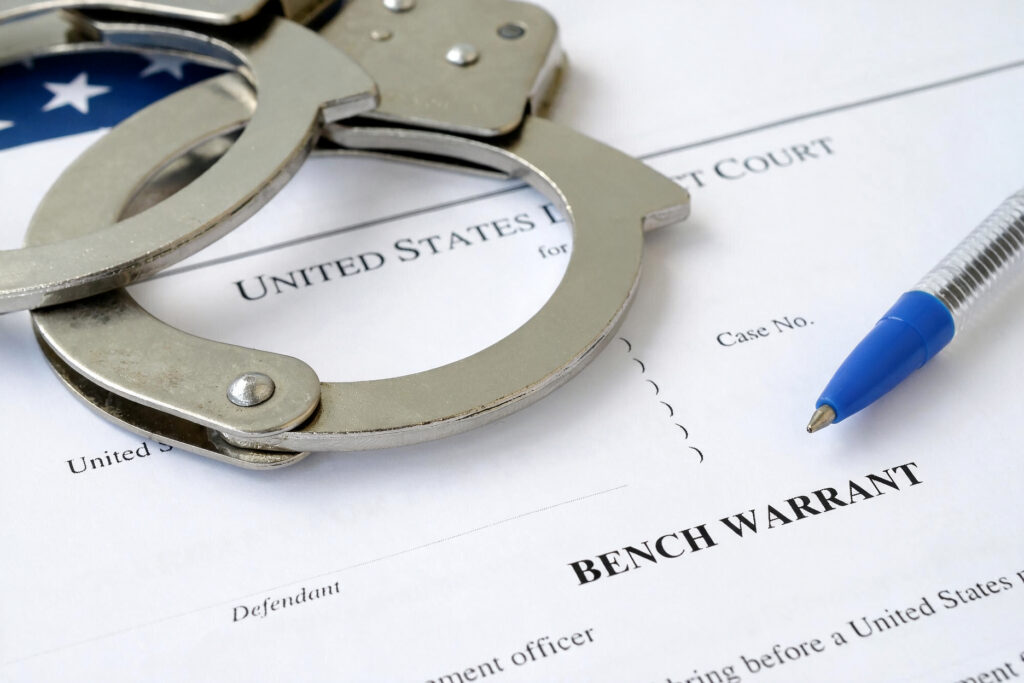

If you or someone close to you has been detained on suspicion of a parole violation, one of the most urgent questions is: how long can they hold you in jail for a parole violation? The answer is more complicated than most people expect, and the timeline depends on the type of violation alleged, whether a hearing is requested, and how the California Department of Corrections and Rehabilitation (CDCR) and the parole board respond. What is clear is that the stakes are high — a sustained parole violation can result in months or even years of additional incarceration.
This guide explains what parole violations are under California law, when parole is granted, what the most common violations look like, what penalties apply, and, critically, what happens at a parole violation hearing and how an experienced attorney can help.
What Is a Parole Violation in California?
Parole is a form of conditional supervised release that allows a person to serve the remainder of their prison sentence in the community rather than behind bars, subject to specific terms and conditions imposed by the California Department of Corrections and Rehabilitation. Parole is not a free pass — it is a privilege that comes with enforceable obligations. A parole violation occurs when a parolee fails to comply with any of the conditions of their parole.
California Penal Code 3056 is the primary statute governing the return to custody of parolees. Under PC 3056, a parolee who violates their conditions can be arrested and held without bail while the violation is investigated and adjudicated. This is one of the most significant differences between parole and probation — parole violations can result in detention without bail, leaving the individual in custody while the process plays out.
There are two broad categories of parole violations in California:
- Technical violations: Failures to comply with specific parole conditions that are not independently criminal. Examples include missing a scheduled meeting with a parole agent, failing a drug test, moving without prior approval, failing to maintain employment, or associating with known felons.
- New criminal violations: Committing a new crime while on parole. This is the more serious category and can result in both prosecution for the new offense and revocation of parole based on the underlying conduct.
When Is Parole Granted in California?
In California, parole eligibility and the parole grant process depend significantly on the nature of the underlying conviction and when the crime was committed. The framework has changed substantially over the years through various reform measures.
For most determinate sentence offenders — those serving fixed sentences for non-life offenses — parole supervision is imposed automatically after release from prison. The length of parole supervision is typically 3 years, though it may be reduced to 1 or 2 years based on the parolee’s compliance and risk assessment.
For indeterminate sentence offenders — those convicted of certain serious or violent felonies and serving life sentences with the possibility of parole — the Board of Parole Hearings conducts a formal suitability hearing to determine whether the individual poses an unreasonable risk of danger to society. These hearings involve comprehensive reviews of the individual’s institutional record, psychological evaluations, parole plans, and victim input.
Realignment under AB 109 (2011) changed the landscape for many lower-level offenders, shifting supervision responsibility from the state parole system to county probation departments under a system called Post-Release Community Supervision (PRCS). The rules and hearing procedures for PRCS violations differ somewhat from traditional state parole violations.
What Are the Most Common Examples of Parole Violations?
Parole conditions vary by individual case, but certain violations come up repeatedly in California parole violation proceedings:
- Failing a drug or alcohol test: Most parolees are subject to random drug and alcohol testing. A positive test — particularly for controlled substances — is one of the most common grounds for a violation report.
- Missing or failing to report to a parole agent: Regular check-ins with the assigned parole agent are a standard condition. Missing scheduled appointments without a documented excuse is a reportable violation.
- Changing residence without approval: Parolees are typically required to notify and obtain approval from their parole agent before changing their place of residence. Moving without permission is a technical violation.
- Leaving the approved geographic area: Parole conditions often restrict travel to a specific county or region. Traveling outside the approved area — even briefly — can constitute a violation.
- Associating with known felons or gang members: Many parolees are prohibited from associating with individuals who have criminal records or who are active gang members.
- Possessing firearms, weapons, or contraband: Parolees are prohibited from possessing firearms regardless of whether their underlying conviction involved a weapon. Possession of any contraband can result in immediate arrest.
- Failing to maintain employment or enrollment: Some parole conditions require the parolee to maintain employment or participate in educational or vocational programs. Failure to do so may be reported as a violation.
- Committing a new criminal offense: Any new arrest — regardless of whether it ultimately results in conviction — can trigger a parole hold and violation proceedings.
What Are the Potential Penalties for a Parole Violation in California?
The consequences of a sustained parole violation depend on the severity of the violation, the parolee’s history, and the recommendation of the parole agent. Under California law, the range of sanctions includes:
- Flash incarceration: For technical violations that do not involve a new crime, the supervising agent may impose flash incarceration — a short period of detention in county jail, typically from 1 to 10 days — without a formal hearing. This is intended as an immediate sanction for lower-level violations.
- Community-based programs: For non-serious violations, the parole agent may recommend participation in community service, drug treatment, counseling, or other rehabilitative programs rather than incarceration.
- Return to prison: For more serious violations — including new criminal conduct, repeated technical violations, or violations that demonstrate a significant risk to public safety — the Board of Parole Hearings may order the parolee returned to prison for a period of up to 12 months for a technical violation, or longer if a new criminal offense is involved.
Under California Penal Code 3056, a parolee can be held in county jail while the violation is investigated and the hearing process plays out. This pre-hearing detention can last from a few days to several months depending on the complexity of the case and the scheduling of the violation hearing.
How Long Can They Hold You in Jail for a Parole Violation?
This is the question most parolees and their families want answered immediately. Under California Penal Code 3056, there is no absolute upper limit on how long a parolee can be held pending a violation hearing — but there are procedural timelines that govern the process:
- Within 3 business days of arrest on a parole hold, the parolee must be given written notice of the alleged violation.
- A probable cause hearing — sometimes called a preliminary hearing — must be held within 15 days of the parolee’s arrest to determine whether there is sufficient evidence to proceed to a full revocation hearing.
- The formal revocation hearing must be held within 45 days of the parolee’s arrest or, in some circumstances, within 35 days of the probable cause finding.
In practice, these timelines are not always strictly adhered to, and delays can extend detention beyond the stated deadlines. An experienced attorney can enforce these timelines and file motions to compel hearing dates when the process is being delayed to the parolee’s disadvantage.
If the violation is sustained at the revocation hearing and the parolee is returned to prison, the length of the return-to-prison term depends on the nature of the violation — typically up to 180 days for technical violations and up to 12 months for the most serious technical violations. New criminal conduct can result in a new prison term consecutive to any remaining parole period.
What Happens at a Parole Violation Hearing?
A parole violation hearing is a formal administrative proceeding before a hearing officer or panel of the Board of Parole Hearings. It is not a criminal trial — the standard of proof is preponderance of the evidence (more likely than not), not the beyond-a-reasonable-doubt standard that applies in criminal proceedings. This lower standard means that the government’s burden of proof is easier to meet, making a vigorous defense even more important.
At the hearing, the parolee has the right to:
- Receive written notice of the claimed violation and the evidence against them.
- Be present at the hearing and present their own evidence and testimony.
- Confront and cross-examine adverse witnesses, unless good cause is shown for why a witness cannot appear.
- Have a lawyer represent them — either retained private counsel or, in some circumstances, appointed counsel.
- Receive a written statement of the evidence relied on and the reasons for the hearing officer’s decision.
The defense strategy at a parole violation hearing depends entirely on the specific facts. For technical violations, the defense may argue that the violation was inadvertent, that mitigating circumstances justify a lesser sanction, or that the evidence of the violation is insufficient. For violations involving new criminal conduct, the defense may challenge the underlying evidence while also working to mitigate the parole consequences.
Conclusion
A parole violation hold is a serious situation that requires an immediate, informed response. The process moves quickly, the consequences are severe, and the lower standard of proof in parole hearings makes having skilled legal representation more important — not less. Understanding how long they can hold you in jail for a parole violation, what the hearing process looks like, and what rights you retain throughout is knowledge that can make the difference between a return to prison and a more favorable outcome.
If you or a loved one has been arrested on a parole hold in Bakersfield or Kern County, contact the Law Office of the Bakersfield Defense Attorney today. We represent clients in parole violation proceedings and will work aggressively to protect your rights, enforce procedural deadlines, and present the strongest possible case at your hearing. Time matters — reach out as soon as possible so we can get to work.