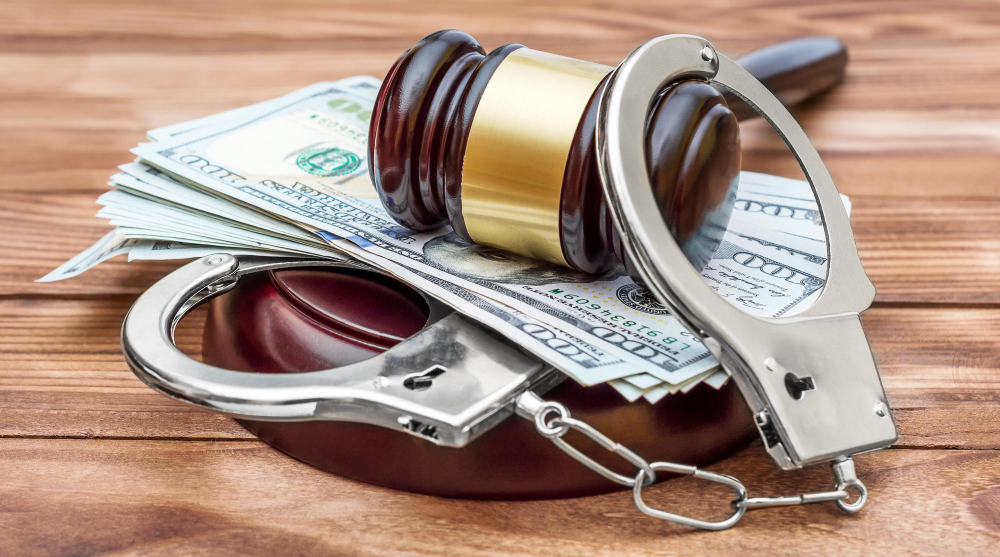

What is a white collar crime? It is a nonviolent crime committed for money, usually by lying, hiding information or misusing a position of trust at work or in business. Fraud, embezzlement and identity theft are common examples.
There is no single California law called “white collar crime.” Each offense has its own code section and its own penalties. Some are misdemeanors, many can be charged as felonies, and some can also be charged in federal court. This guide explains the most common types in plain words, what they can cost you, and what to do if you are being investigated.
What Is White Collar Crime?
The term comes from sociologist Edwin Sutherland. In a 1939 speech to the American Sociological Society, he used it to describe crimes committed by respected people in the course of their jobs. Today, the FBI describes white-collar crimes as crimes that are “not violent, but they are not victimless.”
Most white collar crimes share three traits:
- Deception: The person lies, fakes records, or hides the truth.
- A money motive: The goal is to gain money, property or a business advantage, or to avoid a loss.
- No physical force: Nobody is threatened or hurt. The harm is financial.
Many also involve a position of trust, meaning a job or role where other people rely on you to handle their money honestly. Think of a bookkeeper, a bank teller or a business partner.
Here is an example. An office manager at a small trucking company in Bakersfield pays a few personal bills with the company card each month and codes them as “fuel.” Nobody is hurt, and nothing is taken by force. But it is still a crime, and over a year it can add up to a felony.
You may also see the terms financial crime and corporate fraud. Financial crime is a broader label for any crime involving money, such as fraud or money laundering. Corporate fraud is fraud committed by or inside a company, like faking a company’s earnings.
White Collar Crime vs. Blue Collar Crime
Blue collar crime is an informal name for crimes like burglary, robbery or assault, often called street crime. The main difference is how the crime is committed: white collar crime uses paperwork and trust, while blue collar crime often uses force or direct contact.
| White collar crime | Blue collar crime | |
|---|---|---|
| How it is done | Lies, fake records, hidden money | Breaking in, taking, threatening or hurting |
| Violence | No | Sometimes |
| Where it happens | Offices, banks, online, business deals | Streets, homes, stores |
| How it is found | Audits, bank records, complaints, investigations | Police reports, witnesses, arrests at the scene |
| Examples | Fraud, embezzlement, money laundering | Burglary, car theft, vandalism |
The line is not always clean. For example, using a stolen credit card for more than $950 within six months counts as grand theft, the same charge used for many street thefts. What matters in court is the specific charge, not the label.
9 Common Types of White Collar Crime in California
Here are nine common types of white collar crime under California law, with the code section behind each one.
| Crime | What it means | California law | Misdemeanor or felony? |
|---|---|---|---|
| Fraud (false pretenses) | Lying to get someone’s money or property | PC 484 (false pretenses) | Punished like theft: misdemeanor at $950 or less, wobbler above $950 |
| Embezzlement | Taking money or property you were trusted to handle | PC 503, PC 514 | Punished like theft: misdemeanor at $950 or less, wobbler above $950 |
| Forgery | Faking or changing a check, signature or document | PC 470, PC 473 | Wobbler; checks of $950 or less are usually a misdemeanor |
| Identity theft | Using someone’s personal information without permission | PC 530.5 | Wobbler |
| Credit card fraud | Using a stolen, fake or cancelled card | PC 484g | Grand theft if over $950 in six months |
| Insurance fraud | Filing a false or inflated claim | PC 550 | False claims are a felony |
| Tax evasion | Lying on, or not filing, a state tax return to avoid paying | R&TC 19706 | Wobbler |
| Money laundering | Moving money from a crime to make it look legal | PC 186.10 | Wobbler |
| Bribery | Offering a public official something to influence a decision | PC 67 | Felony |
A wobbler is a crime that can be charged as either a misdemeanor or a felony. The prosecutor decides first, and a judge can sometimes reduce it later.
1. Fraud
Fraud means tricking someone out of money or property with a lie. Say a contractor takes a $6,000 deposit for a kitchen remodel, never planned to do the work, and stops answering calls. That can be theft by false pretenses. Because the amount is over $950, it can be charged as grand theft.
2. Embezzlement
Embezzlement is taking money that was trusted to you, like a cashier pocketing deposits or a treasurer using club funds. California punishes it the same way as theft, so the dollar amount usually decides whether embezzlement is a felony or a misdemeanor.
3. Forgery
Forgery is signing someone else’s name or changing a document to cheat someone. Writing a bigger number on a paycheck or signing a parent’s name on a check are common examples.
4. Identity theft
Identity theft means using another person’s identifying information, like their name, Social Security number or bank account number, for any unlawful purpose. Opening a credit card in someone else’s name is a common example. Because it is a wobbler, identity theft in California can be filed as either a misdemeanor or a felony.
5. Credit card fraud
This covers using a card you know is stolen, fake or cancelled. Small charges may be petty theft. Once the total passes $950 in any six-month period, it becomes grand theft.
6. Insurance fraud
Filing a false or exaggerated insurance claim is a felony in California, with two, three or five years and a fine of up to $50,000 or double the amount of the fraud, whichever is greater. Staging a car accident or claiming a work injury that never happened are typical examples.
7. Tax evasion
Willfully filing a false California tax return, or not filing one to avoid tax, can bring up to one year in county jail or a felony prison term, plus a fine of up to $20,000. Honest mistakes on a return are not a crime. The state has to prove you meant to evade the tax.
8. Money laundering
Money laundering means running money from a crime through banks or businesses to hide where it came from. In California, it applies to transactions over $5,000 in seven days or over $25,000 in 30 days. The fine can reach $250,000 or twice the amount moved.
9. Bribery
Offering money or gifts to a public official to sway a decision is a felony with two, three or four years in state prison. A person convicted is also barred from holding public office in California.
Is White Collar Crime a Felony? Penalties in California
It can be. Many white collar crimes are wobblers, so the same act can be charged as a misdemeanor or a felony. For crimes that are punished like theft, such as fraud, embezzlement and credit card fraud, the amount of money involved is the biggest factor.
| Amount involved | Usual charge | Highest penalty |
|---|---|---|
| $950 or less | Petty theft, a misdemeanor (PC 490.2) | 6 months in county jail and a $1,000 fine |
| Over $950 | Grand theft, a wobbler (PC 487) | 1 year in county jail as a misdemeanor, or 16 months, 2 or 3 years as a felony |
| Over $100,000, in two or more related felonies | Aggravated white collar crime enhancement (PC 186.11) | Extra prison time added on top |
| Over $500,000, in two or more related felonies | Same enhancement | An extra 2, 3 or 5 years in state prison |
An enhancement is extra prison time a judge adds on top of the sentence for the crime itself. California’s law calls this one the “aggravated white collar crime enhancement,” and it applies when someone commits a pattern of related fraud or embezzlement felonies.
A few other rules matter in almost every white-collar case:
- Restitution: If you are convicted, the court orders you to pay back the victim’s financial losses. This is separate from any fine.
- More time to file charges: For felonies based on fraud, prosecutors generally have four years from when the crime was discovered, not from when it happened (PC 801.5). A scheme found years later can still be charged.
- Where you serve time: Many felony white-collar sentences in California are served in county jail rather than state prison, under PC 1170(h). Bribery and the large-loss enhancement are exceptions that carry state prison.
State or Federal? Who Prosecutes White Collar Crime
Is fraud a federal crime? It can be a state crime, a federal crime, or both. The same scheme can break California law and federal law at once, and either government can bring charges.
| State case | Federal case | |
|---|---|---|
| Who prosecutes | The county District Attorney, or the California Attorney General for large cases | The U.S. Attorney’s Office |
| Who investigates | Local police, sheriff, DA investigators, the California DOJ’s White Collar Investigation Teams | The FBI and other federal agencies |
| Which court | County superior court | U.S. District Court |
| Typical cases | Embezzlement from a local business, insurance fraud, forgery | Schemes using mail, phone or internet across state lines, bank fraud, securities fraud |
| Example penalty | Grand theft: up to 3 years | Wire fraud: up to 20 years (18 U.S.C. 1343) |
Federal penalties are often much higher. Wire fraud alone carries up to 20 years, and up to 30 years when it affects a bank or is tied to a declared disaster.
In the Central Valley, federal cases are handled by the U.S. Attorney’s Office for the Eastern District of California. It covers 34 counties, including Kern, and opened a Bakersfield office in 2015 to serve Kern County. Federal magistrate judges also hear cases in Bakersfield.
Knowing which court your case could land in is one of the first things a white collar crime defense lawyer in Bakersfield will look at, because it changes the penalties, the process and the strategy.
How a White Collar Case Usually Starts
Unlike a bar fight or a car theft, white-collar cases rarely start with an arrest at the scene. Many begin with a complaint, an audit, or a bank flag, followed by an investigation that can run for months before anyone is charged. That quiet stretch is when your choices matter most.
Here are the warning signs people often see first and what each one means:
- A call or visit from an investigator: A detective or agent asks to “just talk” about your job, your accounts, or a business deal. Anything you say can be used later.
- A subpoena: This is a written order to hand over documents or show up to testify. A business may get one for its bank or billing records.
- A search warrant: This is a written order signed by a judge that lets officers search a home, office, phone, or computer for evidence.
- A target letter: In federal cases, prosecutors may send a letter saying you are a “target,” meaning they believe there is strong evidence tying you to a crime. The U.S. Justice Manual encourages this notice before charges in some cases.
Say a bookkeeper at a farm supply business in Kern County gets a call from a DA investigator asking about missing payments. She has not been arrested. But if she explains herself on the spot without a lawyer, her own words can become the strongest evidence in the case.
Common Defenses to White Collar Charges
Most white collar crimes require proof that you meant to deceive or cheat someone. That makes intent the center of many defenses.
- No intent to deceive: A failed business deal, a billing error or a bad investment is not fraud unless you meant to cheat someone.
- Honest mistake: For tax charges, the state must prove you willfully tried to evade the tax, not that you made an error on a return.
- Someone else did it: Shared passwords, shared cards and shared office access can make it hard to prove who actually made a transaction.
- Not enough evidence: Paper trails can be incomplete or misread. An expert review of the records can change the whole picture.
- The amount is wrong: Since the dollar amount often decides misdemeanor vs. felony, challenging the loss figure can bring a felony charge down.
Pink, Red, Green and Blue: Other “Collar” Crimes
You may come across other “collar” colors online. These are informal labels used by researchers and writers. None of them is a legal charge in California.
| Term | What it usually means |
|---|---|
| Blue collar crime | Crimes like burglary, robbery or vandalism, often linked to street crime |
| Pink collar crime | Embezzlement by people in lower-level office jobs, often clerical roles, a term tied to Kathleen Daly’s 1989 research |
| Red collar crime | A white collar offender who turns violent to keep a fraud from being exposed (NIJ-funded research) |
| Green collar crime | Crimes that harm the environment, like illegal dumping or pollution |
You may also see “black collar” or “gray collar” crime. Writers use those terms in different ways, and they have no settled meaning.
Frequently Asked Questions
What is the most common white collar crime?
There is no single official ranking that covers every white collar crime. What nearly all of them share is deception. Federal sentencing data shows that deception, trickery or fraud was used against 94% of victims of federal economic crimes in fiscal year 2023.
What is the most famous white collar crime case?
Bernie Madoff’s investment fraud is the best-known example. He ran a Ponzi scheme, an investment fraud that pays earlier investors with money from newer investors instead of real profits. He pleaded guilty to 11 federal counts, including securities fraud, wire fraud and money laundering, and on June 29, 2009, he was sentenced to 150 years in prison. Most white collar cases are far smaller, but the core idea is the same: taking money through deception, whether the amount is $2,000 or billions.
Under Investigation or Charged? What to Do Next
In a white collar case, what you do before charges are filed can shape everything that follows. If you think you are being investigated, these steps protect you:
- Do not talk to investigators without a lawyer: Politely say you want to speak with an attorney first. Trying to “clear things up” often hands the prosecutor their case.
- Do not delete, change or hide records: Destroying documents, emails or texts after you learn about an investigation can lead to extra charges. [VERIFY]
- Do not contact co-workers or the other side about the case: Even friendly messages can be read as pressure or used as evidence.
- Keep your own copies: Save contracts, receipts, bank statements and messages that show what really happened.
| Stage | How a defense lawyer can help |
|---|---|
| Investigation | Speak with investigators for you, handle subpoenas, and sometimes keep charges from being filed |
| Charging decision | Challenge the dollar amount and push for a misdemeanor on a wobbler |
| Court case | Review the financial records, bring in experts, raise defenses and negotiate |
| Sentencing | Argue for probation or alternatives, and work out restitution terms |
| After a conviction | Ask the court to reduce a felony or clear your record |
Already convicted of a white collar crime?
A conviction does not have to follow you forever. If you completed probation, you can ask the court to dismiss the case under PC 1203.4. If your crime was a wobbler felony, you may also be able to have it reduced to a misdemeanor first. Say you finished probation for a 2020 embezzlement case and now want to apply for jobs in accounting. Working with a lawyer to clear a conviction from your record is often the next step.
Talk to a white-collar defense lawyer
If you are under investigation or facing white collar charges in Bakersfield or anywhere in Kern County, call the Law Office of David L. Faulkner at (661) 324-4777 or schedule a free consultation. We will review what investigators have, explain where your case may be filed, and give you an honest view of your options