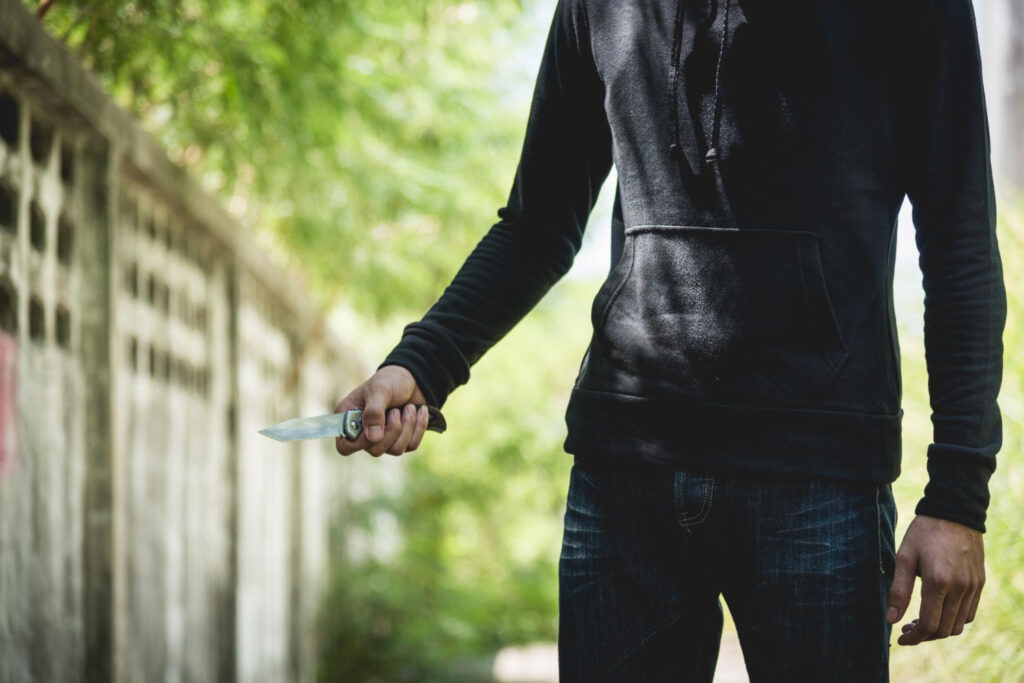

An argument in a parking lot gets heated. Someone lifts their shirt to show a gun tucked in their waistband, or pulls a knife out of their pocket and holds it up. Nobody is touched. Nobody is hurt. A few minutes later, police arrive.
In California, that moment alone can lead to a criminal charge called brandishing.
Many people are surprised to learn you can be charged even if you never pointed the weapon at anyone and never meant to use it. This guide explains what brandishing means under California law, what prosecutors must prove, the penalties, when it becomes a felony, and the defenses that may apply.
What Does Brandishing Mean?
To “brandish” a weapon means to wave it around or show it off in a way that threatens or scares someone. In California, the main law is Penal Code 417.
It makes it a crime to draw (pull out) or exhibit (show) a firearm or other deadly weapon in front of another person in a “rude, angry, or threatening manner.” It is also a crime to unlawfully use one in a fight or argument.
What counts as a “deadly weapon”?
A deadly weapon is not just a gun. California courts treat an object as a deadly weapon if it is:
- Deadly by nature, such as a gun or a dagger, or
- Used in a way that could cause death or serious injury, such as a bat, a screwdriver, or a broken bottle
Hands and feet alone are not considered deadly weapons. If a knife is involved, it also helps to understand California knife laws, since carrying some knives can be a separate crime.
What Prosecutors Must Prove Under PC 417
To convict someone of brandishing, the prosecutor must prove all of the following, based on California’s jury instruction for this crime (CALCRIM 983):
- You drew or showed a firearm or deadly weapon in the immediate presence of another person.
- You did it in a rude, angry, or threatening way, or you unlawfully used the weapon in a fight or quarrel.
- You were not acting in self-defense or in defense of someone else.
Notice what is missing from this list. The prosecutor does not have to prove that you pointed the weapon at anyone, that you meant to hurt anyone, or that anyone was injured.
Examples of Brandishing
- At a party: During an argument, Tony pulls out a pocket knife, opens it, and holds it up while yelling. He never swings it. This can still be brandishing a deadly weapon.
- In a bar dispute: Maria is arguing outside a bar and lifts her jacket so the other person can see her handgun, saying, “You don’t want to do this.” Even though the gun stays in its holster, showing it in a threatening way can count as brandishing.
- On the road: After being cut off, a driver holds up a gun toward the driver of another moving car. This is covered by a stricter law, Penal Code 417.3, which makes it a felony to threaten someone inside a vehicle on a public road with a firearm.
Penalties for Brandishing in California
The penalty depends on the type of weapon, where it happened, and who was there:
| Situation | Law | Charge | Possible jail or prison time |
| Deadly weapon other than a gun | PC 417(a)(1) | Misdemeanor | At least 30 days in county jail |
| Concealable gun (like a handgun) in a public place | PC 417(a)(2)(A) | Misdemeanor | 3 months to 1 year in county jail, plus up to $1,000 fine |
| Any other gun situation | PC 417(a)(2)(B) | Misdemeanor | At least 3 months in county jail |
| Loaded gun at a daycare or youth program while open | PC 417(b) | Misdemeanor or felony | 3 months to 1 year in county jail, or 16 months, 2, or 3 years in prison |
| Gun shown to a police officer on duty | PC 417(c) | Misdemeanor or felony | 9 months to 1 year in county jail, or 16 months, 2, or 3 years in prison |
| Gun shown to a person in a moving vehicle | PC 417.3 | Felony | 16 months, 2, or 3 years |
| Weapon shown to resist arrest | PC 417.8 | Felony | 2, 3, or 4 years in prison |
| Imitation (fake) gun shown in a threatening way | PC 417.4 | Misdemeanor | At least 30 days in county jail |
A few terms explained:
- Misdemeanor: a less serious crime. Unless a law says otherwise, California misdemeanors carry up to 6 months in county jail and up to a $1,000 fine.
- “Wobbler”: a crime that can be charged as either a misdemeanor or a felony. PC 417(b) and 417(c) work this way.
- Minimum jail time: phrases like “at least 30 days” mean the law sets a floor for jail time if you are sentenced to jail for that offense.
If someone is intentionally seriously injured during brandishing, Penal Code 417.6 allows up to 1 year in county jail or a state prison term.
Is Brandishing a Felony in California?
Usually, no. Most brandishing cases under PC 417 are misdemeanors. But it can be charged as a felony when:
- A loaded gun is shown at an open daycare or youth program (PC 417(b))
- A gun is shown to an on-duty police officer (PC 417(c))
- A gun is shown to someone inside a moving vehicle on a public road (PC 417.3)
- A weapon is shown to resist arrest (PC 417.8), which can also bring resisting arrest charges
- Someone is intentionally seriously injured (PC 417.6)
Other Consequences: The 10-Year Gun Ban
Jail time is not the only concern. Under Penal Code 29805, a misdemeanor conviction for brandishing under PC 417 bans you from owning or possessing a firearm for 10 years. Having a gun during that time is a separate crime.
A felony conviction can bring a lifetime ban, similar to the rules explained in felon in possession of a firearm cases.
Other possible effects include probation terms and a criminal record that can show up on background checks.
Brandishing vs. Assault With a Deadly Weapon vs. Criminal Threats
These three charges are often confused. Here is how they differ:
| Point | Brandishing (PC 417) | Assault with a deadly weapon (PC 245) | Criminal threats (PC 422) |
| What it is about | Showing a weapon in a threatening way | Trying to use force likely to cause serious injury | Threatening to kill or seriously hurt someone |
| Is a weapon required? | Yes | Yes (or force likely to cause serious injury) | No |
| Does anyone need to be hurt? | No | No | No |
| Usually charged as | Misdemeanor | Misdemeanor or felony | Misdemeanor or felony |
In short, brandishing is about the display. Assault with a deadly weapon involves an attempt to use force, while a criminal threats charge is about the words and the fear they cause. Prosecutors sometimes file more than one of these charges from the same incident.
Common Defenses to Brandishing
Every case is different, but these defenses often come up:
- Self-defense or defense of others. PC 417 itself says it does not apply when you act in self-defense. If you reasonably believed you or someone else was in danger, showing a weapon may be legal. California self-defense laws explain when this applies.
- No rude, angry, or threatening manner. Simply having a weapon visible, or showing it calmly, is not enough.
- No one else was present. The law requires the display to happen in the presence of another person.
- Not a deadly weapon. The object may not qualify under the law.
- False accusation or mistaken identity. Heated arguments often lead to conflicting stories. Witnesses, video, and phone records can matter a lot.
How a Bakersfield Defense Lawyer Can Help
A brandishing charge can affect your freedom, your record, and your right to own a gun for years. A defense lawyer can:
- Review the evidence, including witness statements, video, and 911 calls
- Build a self-defense case when you were protecting yourself or someone else
- Push to reduce or dismiss charges, especially when the facts are unclear
- Negotiate to avoid a conviction that triggers the 10-year gun ban, when possible
If the case also involves a fight or injury, our assault and battery lawyer team can handle every charge together.
Frequently Asked Questions About Brandishing
Is 417 PC a felony or misdemeanor?
Most PC 417 cases are misdemeanors. Showing a loaded gun at an open daycare or youth program, or showing a gun to an on-duty police officer, can be charged as either a misdemeanor or a felony. Related laws, like PC 417.3 (threatening someone in a moving vehicle) and PC 417.8 (resisting arrest), are felonies.
What is considered brandishing a firearm?
Drawing or showing a gun in front of another person in a rude, angry, or threatening way, or using it unlawfully in a fight or argument. You do not have to point it at anyone.
Is it still brandishing if the gun is not loaded?
Yes. PC 417 applies to a firearm “whether loaded or unloaded.” The only part of the law that requires a loaded gun is the daycare and youth program section.
Can you brandish a weapon in self-defense?
The law makes an exception for self-defense. If you reasonably believed you or someone else faced danger, showing a weapon may not be a crime. Whether the defense applies depends on the facts, so talk to a lawyer before explaining your side to police.
Can a brandishing conviction be expunged?
Often, yes, if you meet the requirements, such as finishing probation. An expungement in California can help with many job applications. However, under Penal Code 1203.4, an expungement does not restore your right to own a firearm during the 10-year ban.
Charged With Brandishing in Bakersfield? Get Help Early
A brandishing charge often starts with a tense moment that lasted only seconds. But the effects, like jail time, a criminal record, and a 10-year gun ban, can last for years.
The Law Office of David L. Faulkner can review what happened, explain your options, and fight to protect your record and your rights. Talk to our Bakersfield criminal defense lawyer before you speak to police or accept any deal.
Call (661) 324-4777 for a free, confidential consultation or contact us online.