
A first-offense DUI in California with no injury is a misdemeanor. You will not go to prison. You will probably not go to jail. You will lose your license for a while, pay a fine that grows several times over with fees, sit through a three-month class, and spend three years on probation. The part people get wrong is the order of events and the one deadline that cannot be missed. Here is what happens, in the order it happens, for someone arrested in Kern County.
The night of the arrest
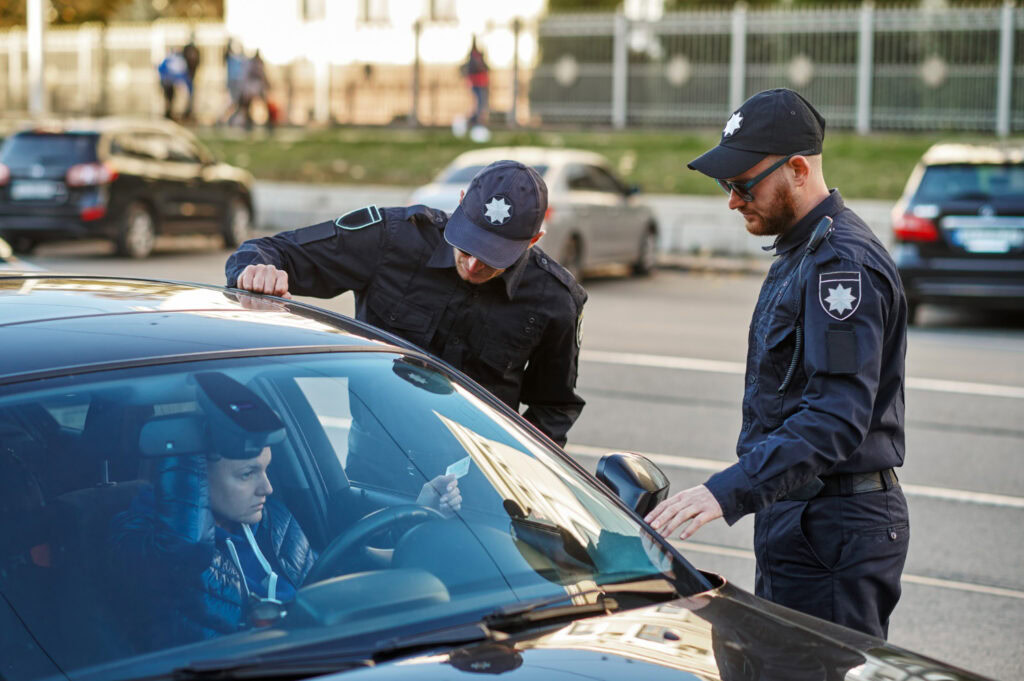
Most first DUI cases in Bakersfield start the same way: a traffic stop on Highway 99, Rosedale Highway, or a surface street after midnight, a smell of alcohol, and field sobriety tests on the shoulder.
There are two breath tests, and they are not the same. The handheld one at the roadside is a preliminary alcohol screening test. Under Vehicle Code 23612, it is treated as a field sobriety test, and the officer has to tell you it is voluntary. Drivers under 21 are held to a separate rule. The test after arrest, breath or blood at the station or hospital, is the evidentiary test. By driving in California you have already consented to that one, and refusing it brings its own penalties.
After the arrest you are booked, usually at the Kern County Sheriff’s Central Receiving Facility in downtown Bakersfield, and released within hours on a first offense. You leave with two things: a citation with a court date, and a pink DMV form. The officer keeps your license. The pink form is your temporary license and your notice that the DMV intends to suspend you.
The first 10 days: the DMV track
The DMV runs its own case, separate from the court, and it moves first.
Under Vehicle Code 13558 you have 10 days from the date on that pink form to request a hearing. If you do nothing, the suspension takes effect on its own. For a first offense at 0.08 or above, that is a four-month administrative suspension under Vehicle Code 13353.3. If you refused the evidentiary test, Vehicle Code 13353 makes it a one-year suspension.
The hearing is narrow. The DMV decides whether the officer had reason to stop you, whether you were lawfully arrested, and whether you were at 0.08 or refused. Winning keeps your license while the criminal case plays out. Even losing has value: it is a preview of the officer’s testimony, under oath, before trial.
Requesting the hearing is the single thing to do in the first week. Everything else can wait for a lawyer.
The court track
Your first court date is the arraignment, at the Kern County Superior Court Metropolitan Division on Truxtun Avenue. You hear the charges, which for a first offense are normally two counts under Vehicle Code 23152: driving while impaired, and driving at 0.08 or above. You enter a plea.
From there the case moves through pretrial conferences where the evidence is exchanged and the plea offer is negotiated. Most first DUI cases resolve at that stage without a trial.
Will I go to jail for a first DUI in California?
Usually not, if nobody was hurt and nothing made it worse. Under Vehicle Code 23538, when a judge grants probation on a first offense, jail is optional and ranges from zero to six months. In Kern County a plain first offense at a moderate blood alcohol level with no accident almost always ends with no custody beyond the night of the arrest.
Four facts change that:
| Aggravating fact | What the law does | Statute |
|---|---|---|
| Blood alcohol of 0.15 or higher | The court must treat it as a special factor that can justify a harsher sentence and stricter probation terms | VC 23578 |
| Blood alcohol of 0.20 or higher | DUI program jumps from 3 months to 9 months | VC 23538(b)(2) |
| Refusing the evidentiary breath or blood test | 9-month program, plus the probation terms must include the jail range, which in practice means a 48-hour minimum | VC 23577, 23538 |
| A child under 14 in the car | 48 continuous hours in county jail, added on top, that cannot be stayed | VC 23572 |
An accident with injury to someone else is a different charge, covered below. A high-speed stop can add 60 days under Vehicle Code 23582, but only if you were also driving recklessly.
1st DUI in California penalties
These are the ranges for a first offense with no injury when the judge grants probation, which is the normal outcome.
| Penalty | Range |
|---|---|
| County jail | 0 to 6 months, judge’s discretion (48-hour minimum with a refusal or child passenger) |
| Base fine | $390 to $1,000 |
| Penalty assessments and fees | Added on top; the total is several times the base fine and varies by county |
| DUI program | 3 months, or 9 months at 0.20 or with a refusal |
| License | 6-month court suspension, which runs with the 4-month DMV suspension |
| Restricted license | Available with proof of DUI program enrollment, an SR-22 and fees; work, work-related and program driving only for 12 months |
| Ignition interlock | Up to the judge: an IID for up to 6 months, or the restricted license instead, not both |
| Probation | 3 to 5 years |
Two corrections to what you may have read elsewhere. The ignition interlock is not mandatory on a first offense; a 2026 bill to make it mandatory, AB 1830, failed. And the restricted license under Vehicle Code 13352.4 does not require a device. The judge orders a device, or you apply for the restricted license. The choice is a real sentencing argument, and the tradeoffs in the ignition interlock program depend on how far you drive.
Is a first-time DUI a felony in California?
No, not on its own. A first DUI with no injury is always a misdemeanor. It can be a felony if someone other than you was hurt, which is charged under Vehicle Code 23153 and can be filed as a misdemeanor or a felony. The 2027 change that makes a third DUI in 10 years a felony does not touch a first offense. The line between the two is explained in the post on when a DUI becomes a felony in California.
How a first DUI case ends
Four ways, from best to worst.
Dismissal or reduction for a weak case. The stop had no lawful basis, the breath machine was out of calibration, the blood draw chain of custody is broken, or the test came too late to prove your level at the time of driving. These arguments are won in motions before trial, not at trial.
Wet reckless. The most common outcome for a first offense near the limit with no aggravators. Under Vehicle Code 23103.5, you plead to reckless driving and the prosecutor states on the record that alcohol was involved. You avoid the DUI label, the DUI license suspension, and often the DUI program. You do not avoid everything: a wet reckless counts as a prior DUI for 10 years, and starting January 1, 2027, Senate Bill 907 requires the judge to give you the same warning on a wet reckless plea that comes with a DUI conviction, that a future DUI that kills someone can be charged as murder.
Plea to the DUI. When the evidence is solid, the negotiation is about the terms: no jail, the shorter program, a device instead of the longer suspension.
Trial. Rare on a first offense, but the right call when the stop was bad or the blood result is close to the line.
One option that does not exist: diversion. Vehicle Code 23640 bars any California court from pausing a DUI case so you can finish a program and then dismissing it. The misdemeanor diversion other charges get is not available here. Anyone telling you otherwise is describing another state.
What the next three years look like
Probation runs three to five years, longer than the one-year cap on most other misdemeanors, with a standard condition that you not drive with any alcohol in your system. A missed class or a failed test is a probation violation with its own hearing.
Your insurer finds out through the SR-22 filing, which has to stay in force for three years under the restricted license. Under Insurance Code 1861.025, you lose California’s Good Driver Discount for 10 years. The conviction itself stays on your DMV record for 10 years and on your criminal record until a court dismisses it, and the three different clocks on how long a DUI stays on your record each run on their own schedule.
A first DUI in Bakersfield and Kern County
Three agencies make most DUI arrests here: Bakersfield Police inside the city, the Kern County Sheriff’s Office in Oildale, Lamont, Rosedale and the rest of the unincorporated county, and the California Highway Patrol on Highway 99, Highway 58 and Interstate 5. Whichever agency makes the arrest, the case lands in the same downtown courthouse.
One local note. The DUI program has to be a state-licensed provider, and the court or your attorney will give you the current list for Kern County. Enrolling early is one of the few things that helps on both the DMV side and the court side, because the restricted license and the probation terms both depend on proof of enrollment.
Common questions
Is a DUI a felony in California in 2026?
A first or second DUI with no injury is a misdemeanor. A DUI that injures someone can be a felony. From January 1, 2027, a third DUI within 10 years can also be charged as a felony.
What is the 3-hour rule for DUI in California?
Vehicle Code 23152(b) says that if your chemical test shows 0.08 or more within three hours of driving, the law presumes you were at 0.08 while driving. It is a presumption your lawyer can rebut, for example with evidence that your level was still rising when you were stopped.
What percent of DUI cases get dismissed in California?
No reliable statewide figure exists, and anyone quoting one is guessing. Outright dismissals are uncommon. Reductions to wet reckless or lesser charges are common on first offenses, and that is the realistic goal in most cases.
Is it worth fighting a DUI in California?
Almost always worth contesting, rarely worth taking to a jury. Requesting the DMV hearing, reviewing the stop and the test, and negotiating the charge down can turn a DUI into a wet reckless or cut the terms. Whether a trial makes sense depends on the evidence, and that is a conversation for after the records come in.
How much does a first DUI cost in California?
The base fine is $390 to $1,000, and that is the smallest line. Add penalty assessments, the DUI program, the SR-22 and higher premiums for years, the device if one is ordered, towing, and attorney fees. The total varies too much by case to give an honest single number.
Talk to a Bakersfield DUI attorney before the 10 days run out
The DMV deadline, the arraignment and the plea offer all come in the first few weeks, and that is when a first DUI is won or lost. If you were arrested in Kern County, contact the Law Office of David L. Faulkner for a free consultation. We will request the hearing, pull the stop and test records, and tell you which of the four outcomes above is realistic for you.